Into The Mystic: 70’s Singer-Songwriter Iceberg
Since I began my music discovery journey digging down alternative music rabbit holes, sometimes I still “discover” insanely popular classic rock that is new to me and not to the rest of the world. This usually plays out the same way: me telling Erin about a song I’ve been really digging and her laughing in my face and hurling explicit language at me. That’s exactly what happened in 2020 when I said I liked This Must Be The Place (… the cover by indie band Sure Sure) and that’s exactly what happened, 6 years later, when I tried to put her on to the folk rock masterpiece Into the Mystic this year. Honestly, valid, that Sure Sure cover really sucks.
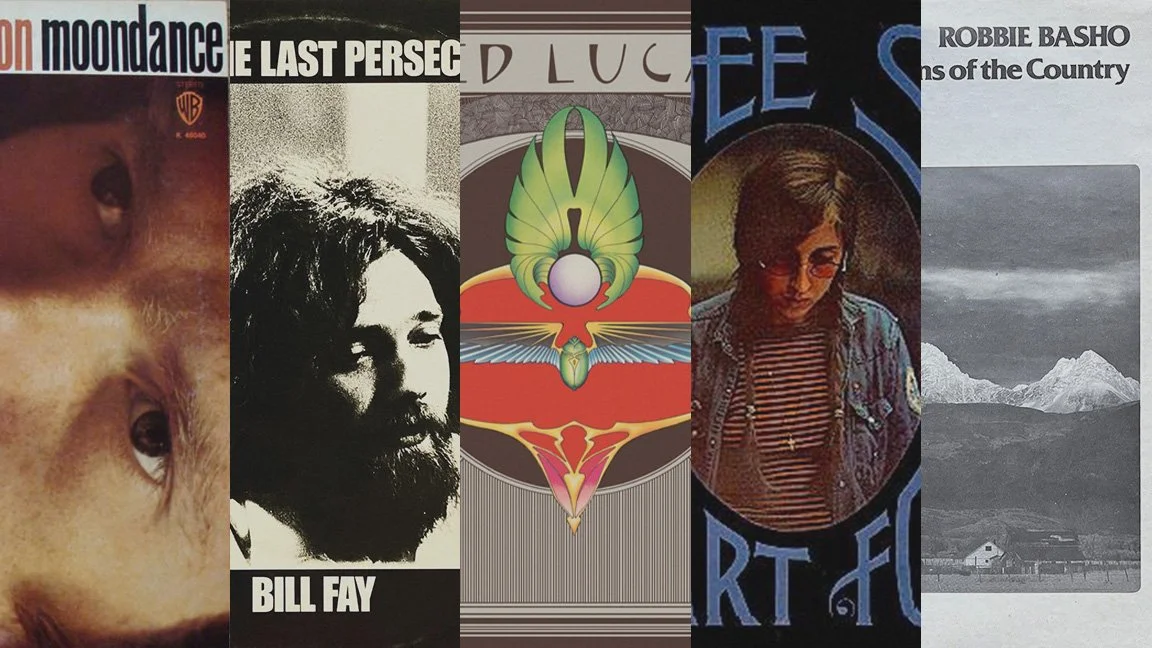
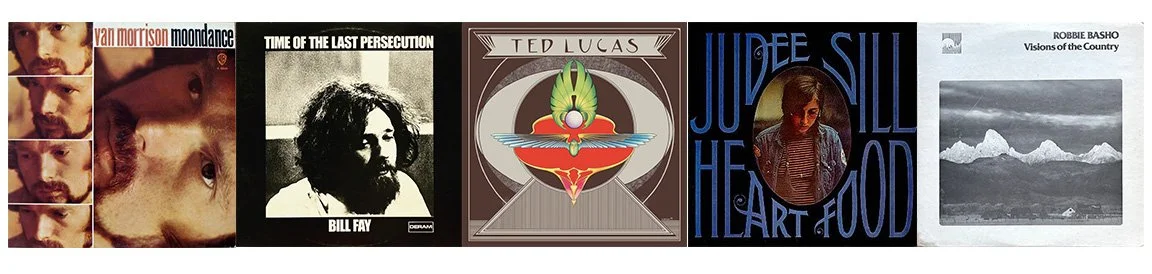
This year, I was also enjoying the extremely chill self-titled album by Ted Lucas and digging deeper into American primitivism music with guitarists like John Fahey and Robbie Basho. When deciding to write about Van Morrison’s Moondance, I thought it fitting to include two other singer-songwriter albums I love to connect the three that were new to me. Here are five loosely connected singer-songwriter records from the 1970’s for you to check out.
Van Morrison - Moondance (1970)
As mentioned above, stumbling across Into the Mystic was the catalyst for me to give some attention to the album Moondance by classic rock legend, Van Morrison. Only familiar with Astral Weeks by name and the hit song Brown Eyed Girl, I could pick Van Morrison out of a lineup but hadn’t personally dug into his music. This is probably due to an internal bias where classic rock icons give me a “too popular, missed the boat” feeling, like not having seen Game of Thrones 10 years after everyone is done talking about it. And like most of those other cases, I was wrong. This record deserves the praise it gets. Other than Into the Mystic, highlights for me include the album opener and the very random piece of vocal jazz on the title track. I also love the bluesy These Dreams of You. I write here not ashamed to admit I was familiar with Crazy Love as a preteen via 2009 Michael Bublé version. Proof anyone can change.
Bill Fay - Time of the Last Persecution (1971)
Starting the dive down the iceberg is the spiritual folk rock on Bill Fay’s Time of the Last Persecution. If you are looking for more obscure, but polished, 70’s tunes with off-kilter songwriting, prevalent religious imagery, and apocalyptic undertones, this is the record for you. There are tinges of pysch rock here that pop up but never become too distracting. Omega Day sets the tone with a nice bassline, horns, electric guitar, and trademark psych rock hard panned mixing. I Hear You Calling is soft and sweet, the piano and guitar tones intermingle in a way that sounds subtly modern. Fay’s dark lyricism feels akin to some of Leonard Cohen’s abstract poetry. The title track serves as a climax of sorts where the psych rock influence overflows into a bitesize freakout in the outro. This album sounds familiar from the beginning, while still culminating in a unique project that feels like someone’s vision fully realized.
Ted Lucas - Ted Lucas (1976)
Dipping down into a mellower mood, Ted Lucas takes you on a spiritually centering journey with his 1976 self-title record. Mixing calm singer-songwriter tunes with acoustic blues and hints of American primitivism, Ted Lucas is an easy album to listen to. The vocal doubling and processing creates a 70’s hippie Bon Iver atmosphere. It’s comforting and encourages you to play it again when it ends. I found myself playing this a lot when I was working late into the evening, with the 7pm summer sun gently warming my skin until I would eventually cave and draw the blinds to block it. Ted Lucas is not all atmosphere though, the tunes are equipped with sticky melodies to accompany the meditative lyrics. The string from Now That I Know to Baby Where You Are is my favorite section. The 5 songs tacked on the streaming version are worth sticking around for too. The three track run from Nobody Loves Me Like My Baby Does to Head In California captures what this record is about just as well as what precedes it in the primary tracklist.
Judee Sill - Heart Food (1973)
If you combine the vocal doubling from Ted Lucas and the religious fervor and dark undertones from Bill Fay, you get Judee Sill. Heart Food is at times hopeful and bright and at times haunting and foreboding. Sill takes a more gospel inspired chamber folk approach to her songwriting that gives her a unique edge in the Laurel Canyon scene in the 70’s. Her uncanny vocal doubling comes to a head in the album closer The Donor. The intro of The Donor is mesmerizing. Sill’s doubled vocals are paired with a deep, or pitched down, backup vocal and the hummed melody is repeated, delayed, #slowed+reverbed until it feels like getting swept up in some culty chant. Other favorites of mine include There’s a Rugged Road and The Kiss. If you are interested in 70’s counter culture folk rock, give this a shot.
Robbie Basho - Visions of the Country (1978)
The final entry in this list is Visions of the Country by Robbie Basho. Calling this a singer-songwriter record is a stretch, but given the spiritual path we’ve been on, dipping fulling into American primitivism and progressive folk on the final stop makes sense to me. I also just wanted a reason to talk about Basho. A real anomaly, Robbie Basho combines intricate solo guitar playing with operatic vocals for rich and transcendent compositions. Visions of the Country does not meet you halfway, it laments loudly and is indifferent whether or not you stick around. In modern terms, the caterwauling vocals are a powerful cross of what you hear on Cameron Winter’s solo work and ANOHNI’s 2023 record My Back Was A Bridge For You To Cross. To me, the vocals are gorgeous, but they are definitely the largest hurdle to cross here. Speaking of Cameron Winter, early versions of If You Turn Back Now were based off an interpolation of Orphan’s Lament. The dominoes are all falling into place. Rocky Mountain Raga is a highlight for me, but this record does not lend itself to cherry picking singles. Light a couple candles, let in the cold, and allow Visions of the Country take you wherever it may take you.

Thanks for reading, cheers and happy listening!